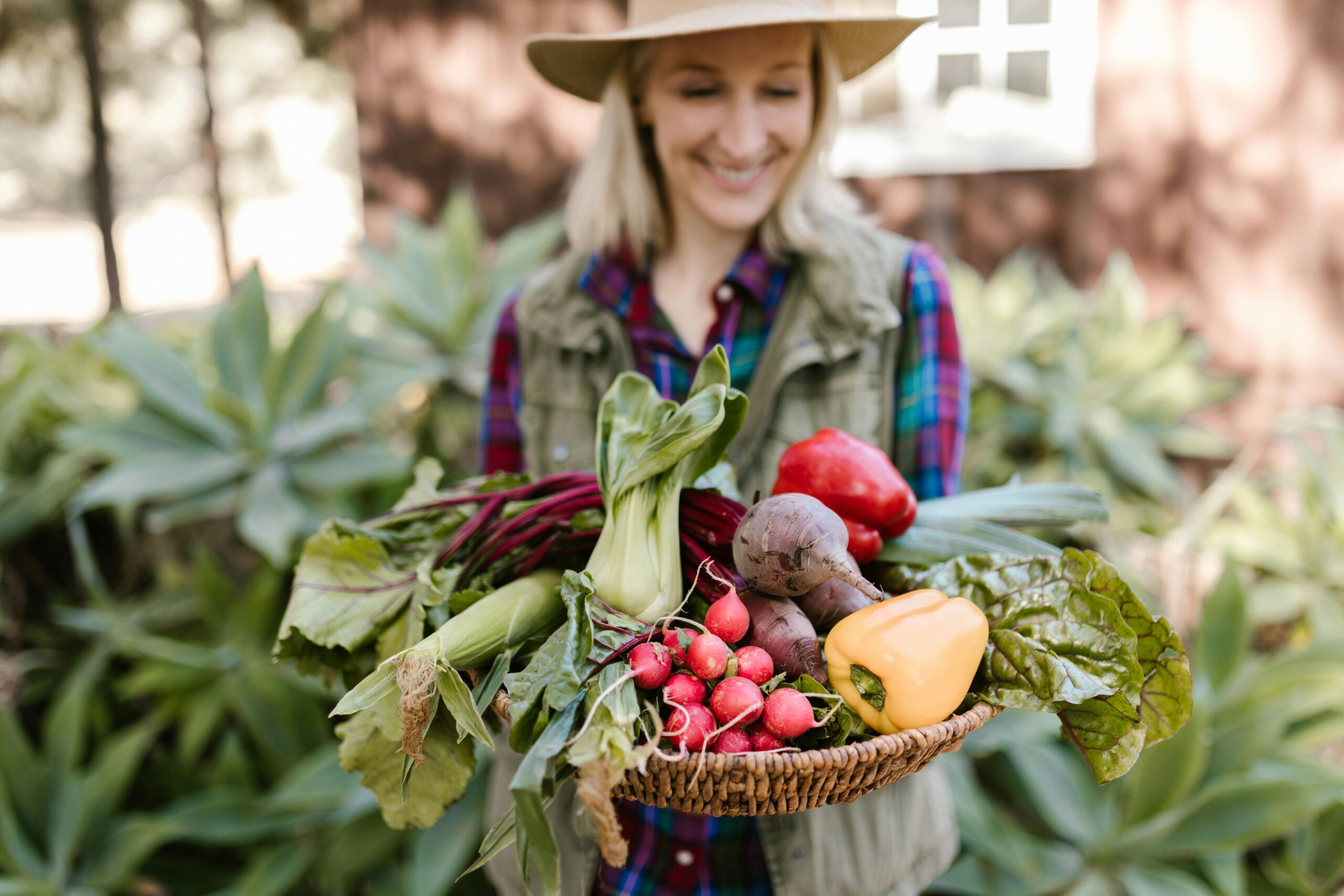
Growing your own food is one of the best things you can do, even if you don’t have a big yard. You can do it on a small balcony, in a small garden, or even on a sunny windowsill. Even a little space may produce a lot of fresh veggies, herbs, and fruits during the growing season if you use the appropriate planning technique.
Start With What You Have: Space and Sunlight Assessment
Before buying a single seed packet, take stock of your growing conditions. Walk your space at different times of day and note how many hours of direct sunlight it receives. Most vegetable crops need 6 to 8 hours of direct sun daily to thrive.
Not all crops demand the same light intensity:
- Fruiting crops: tomatoes, peppers, cucumbers, beans — require the most sun. Place these in your brightest spots.
- Leafy greens: kale, spinach, lettuce, Swiss chard — tolerate partial shade and suit less sunny corners.
- Root vegetables: beets, carrots, turnips — fall in between; they need decent sun but aren’t as demanding as fruiting crops.
If outdoor space is limited or absent entirely, indoor growing is a genuine option. Sprouts require no soil or sunlight and can be grown in mason jars with mesh lids, ready to eat in 4–5 days.
Microgreens need only a shallow tray, quality potting mix, and a full-spectrum grow light. Compact herbs like basil and parsley also perform well under grow lights on a countertop or shelf.
Choosing Your Growing Setup
In-Ground Beds
If you have a yard, the ground is your most cost-effective growing medium. Native soil almost always needs improvement before it can support a productive vegetable garden. Amend it generously with compost before planting each season, and again each time a crop finishes and a new one goes in.
Healthy garden soil balances clay, sand, and organic matter, draining well without drying out too fast.
Raised Beds
Raised beds give you complete control over soil quality and are particularly productive in small spaces. A 3-foot-wide bed is ideal: you can reach the center from either side without stepping on the growing area, preventing compaction and keeping root zones aerated. Lengths of 6 to 35 feet are all workable.
Keep pathways between beds at least 18 inches wide, though 24 inches is more comfortable, especially mid-summer when plants overflow their boundaries.
Containers
Containers work well on balconies, patios, or any paved surface. They’re flexible, move them to chase sunlight or protect plants from wind.
Trade-offs include:
- Soil dries out faster, and nutrients leach out with regular watering.
- Weight matters: before loading a balcony, check your building’s structural weight limits per square foot — and actually weigh your containers to stay well within that limit.
- Choose containers with legs or elevate them slightly to allow airflow underneath and prevent moisture damage to surfaces below.
- Self-watering containers with a bottom reservoir reduce watering frequency and help maintain consistent moisture.
When filling containers, blend a quality outdoor potting mix with compost or organic fertilizer. Buy potting mix in large bags; the per-liter cost is significantly lower than in small bags, often saving around 25%.
Building the Right Soil Foundation
Soil is the backbone of any productive garden. In raised beds or containers, you’re responsible for creating and maintaining fertility from scratch.
- Add compost every time you plant, not just at the start of the season, but each time a crop finishes and a new one goes in.
- For containers, supplement with compost or organic fertilizer every couple of weeks during the growing season, since nutrients exit with excess water.
- Use a general-purpose organic fertilizer for leafy greens; switch to a flower-and-fruit formula when growing tomatoes, peppers, or cucumbers.
- Apply 1–2 inches of organic mulch over soil surfaces to retain moisture, moderate temperature, and suppress weeds. Fallen leaves cost nothing and work perfectly.
Intensive planting, placing plants closer together than standard spacing guides recommend, reduces exposed soil, cuts water evaporation, and suppresses weeds naturally. In dry climates, this is a major advantage. In humid environments, tighter spacing can encourage fungal issues, so adjust based on your conditions.
Designing Your Layout for Maximum Output
Map It Before You Plant
Sketch your space, even a rough diagram on paper, and note the dimensions of each bed or container. List every crop you want to grow and look up its spacing requirements. This prevents the common mistake of buying more seedlings or starting more seeds than your space can support.
Core Layout Strategies
Vertical growing: Trellising climbing crops, such as cucumbers, beans, and peas, multiplies yield per square foot without requiring additional ground area. Train them up a fence, arch, or stake-and-string system. Let beets, lettuce, or compact herbs occupy the ground below two harvests from one patch of soil.
Succession planting: For crops, you want kale, lettuce, tatsoi, sow or transplant a fresh round every 2–3 weeks. As one batch is harvested, the next is nearly ready. This is how a small garden produces throughout the season rather than in one overwhelming flush.
Interplanting: Pair fast-maturing crops with slower-growing ones. Lettuce planted beneath young tomatoes completes its cycle before the tomatoes expand and shade that area. Cucumbers on a trellis can share ground with beets below, two crops occupying different vertical zones with no competition.
Perennial borders: Use the edges of beds for perennial herbs, pollinator flowers, and low-growing companions. These don’t crowd your main crops but add year-round value.
Sample 2×6 Ft Bed Layout
A 2×6 ft raised bed is a manageable, high-output starting point.
Here’s a cool-season combination that makes efficient use of every position:
| Position | Crop | Notes |
|---|---|---|
| Back row | Dinosaur (lacinato) kale | Grows tall; harvest outer leaves continuously |
| Back row alternate | Broccoli | Space 12 inches apart; harvest the main head, then the side shoots |
| Middle | Celery | Needs steady moisture; position near irrigation source |
| Middle | Leaf lettuce | Quick harvest; vacates space for kale/broccoli as they expand |
| Corners | Swiss chard | Thin to one plant per spot; harvest outer leaves repeatedly |
| Base of trellis | Compact snap peas | Choose container varieties bred for small spaces |
| Front edge | Beets | Steady moisture prevents pithy texture; direct sow |
| Ends | Alyssum | Attracts hoverflies and beneficial insects; pleasant honey scent |
| Scattered | Cilantro | Bolts to flower quickly — excellent for pollinators and ladybugs |
| Small gaps | Multiplying onions | Plant bulbs 2 inches deep; harvest one stalk at a time all season |
Picking the Right Plants
The guiding rule: grow what you actually eat regularly. It’s easy to fill a small space with novelties at the expense of reliable, high-use crops. In your first season, focus on a handful of staples and expand from there.
Best performers in small spaces:
- Cherry tomatoes: high yield from a compact footprint; one or two plants supply generously through summer
- Kale and Swiss chard: cut-and-come-again; a single planting provides harvests for months
- Snap peas and beans: fast-maturing, vertical growth habit, excellent value per square foot
- Cucumbers: train vertically; prolific once established
- Herbs (basil, parsley, cilantro, dill): expensive to buy fresh, inexpensive, and easy to grow
- Lettuce: harvest outer leaves continuously or grow cut-and-come-again mixes
- Edible flowers (nasturtiums, calendula, alyssum): attract pollinators, assist pest control, and look beautiful
Crops to approach carefully in very small spaces:
- Full-size indeterminate tomatoes: require large cages and significant room
- Sprawling squash or pumpkins: only viable if you can direct them vertically up a strong trellis
- Corn: needs too many plants in proximity for effective pollination; rarely worth the footprint.
Seeds vs. Seedlings
Buying transplants is convenient but expensive. A single seedling often costs as much as an entire seed packet containing dozens of plants. In your first year, seedlings make sense while you’re getting established. From year two onward, starting from seed indoors under grow lights, 6–8 weeks before the last frost, significantly reduces annual planting costs.
Grow lights used for spring seedlings serve double duty as microgreens lights in winter, making them a multi-purpose investment rather than a seasonal expense.
Additional cost-saving measures:
- Save seeds at the end of the season from open-pollinated (non-hybrid) varieties.
- Source secondhand containers from local marketplaces or community groups.
- Reuse potting mix that wasn’t affected by disease or pests, refreshed with fresh compost.
Watering Strategies That Actually Work
Consistent moisture is non-negotiable. Swinging between drought-dry and waterlogged causes a wide range of problems: stringy celery, cracked tomatoes, bitter lettuce, pithy beets.
Practical options for small-space gardeners:
- Watering can: Simple and sufficient for small setups. Water at the soil level, not over foliage.
- Drip irrigation or soaker hose: Delivers water directly to roots, reduces evaporation, and can be automated with a timer essential if you travel.
- Ollas: Unglazed terracotta vessels buried in the soil and filled with water. Moisture seeps slowly through the clay into the surrounding root zone, providing consistent, low-effort irrigation with minimal runoff. Particularly effective in hot, dry climates.
- Automated pump systems: A small programmable pump drawing from a storage reservoir through individual irrigation stakes can maintain the garden for up to a week unattended, practical for balcony growers.
Mulching over the soil surface reduces watering frequency with any of these methods.
Flowers and Herbs
In a small garden, every planting decision should pull its weight. Flowers and herbs earn their place through pest management and pollination support.
Alyssum planted at bed ends attracts hoverflies whose larvae feed voraciously on aphids. Cilantro left to bolt draws ladybugs in remarkable numbers every life stage, from egg to adult, visible on the stems and flowers.
Calendula repels whitefly and lures a wide range of predatory insects. These plants perform ecosystem services that chemical controls can’t replicate, and they do it quietly, season after season.
Even one or two flowering plants at the corners of a bed makes a measurable difference in pest pressure and overall garden health. A diverse planting is far more resilient than a monoculture.
Extending Your Season
More growing weeks mean more food from the same footprint. Low-cost techniques that work in any small garden:
- Frost blankets and row covers: Drape over beds to protect crops from late spring or early autumn frosts, extending your usable season by several weeks at each end
- Mini hoop tunnels: Wire hoops over a bed with clear plastic or frost fabric create a warmer microclimate that buffers against cold snaps
- South-facing placement: Position cold-sensitive crops against a south-facing wall or fence — thermal mass absorbs heat during the day and releases it overnight
- Late-season succession sowings: Fast-maturing crops like radishes, spinach, and arugula sown in late summer produce harvests through autumn that most gardeners miss entirely
Some crops, such as garlic, leeks, Brussels sprouts, carrots, and turnips, can overwinter in the ground in mild climates, using your garden as cold storage and actually sweetening in flavour after frost exposure.
Harvesting and Putting It to Use
Plan what you’ll do with each crop before you plant it. A garden that produces more than you can use or eat fresh needs a preservation strategy.
Practical approaches to abundance:
- Excess basil → blended and frozen as pesto in ice cube trays.
- Surplus cucumbers → quick-pickled with dill and garlic.
- Snap peas and beans → blanched and frozen at peak freshness.
- Tomatoes → slow-roasted and jarred for winter use.
- Fresh herbs → dried, frozen in olive oil, or made into compound butter.
Harvest consistently. Kale, chard, beans, peas, and cucumbers all slow or stop producing if mature growth is left on the plant. Regular picking signals the plant to keep producing — it’s the single most effective way to extend the life of most crops.
Managing Costs Over Time
The economics of small-space food growing improve significantly year over year. The first season typically costs the most: containers, soil, tools, and infrastructure are all purchased upfront, and seedlings are bought because seed-starting isn’t yet set up. The return on investment looks modest.
By the second and third seasons, infrastructure costs approach zero. Seed-starting replaces expensive transplants. Soil is refreshed rather than replaced. Tools are already in hand. By year three or four, many growers find their home-grown produce costs less than equivalent store-bought items — and tastes incomparably better.
Final Thoughts
Small-space gardening has a learning curve. The first season rarely goes perfectly, and that’s part of the process. What changes over time is the compounding value of experience: you learn your microclimate, discover which crops thrive in your specific conditions, and develop the daily habit of observation and care that makes a garden genuinely productive.
Start with a small number of plants you love to eat. Master the basics of soil health, watering consistency, and timing. Then expand. A garden that reliably produces food you actually use is far more valuable than a large, overwhelming plot that burns you out in year one.