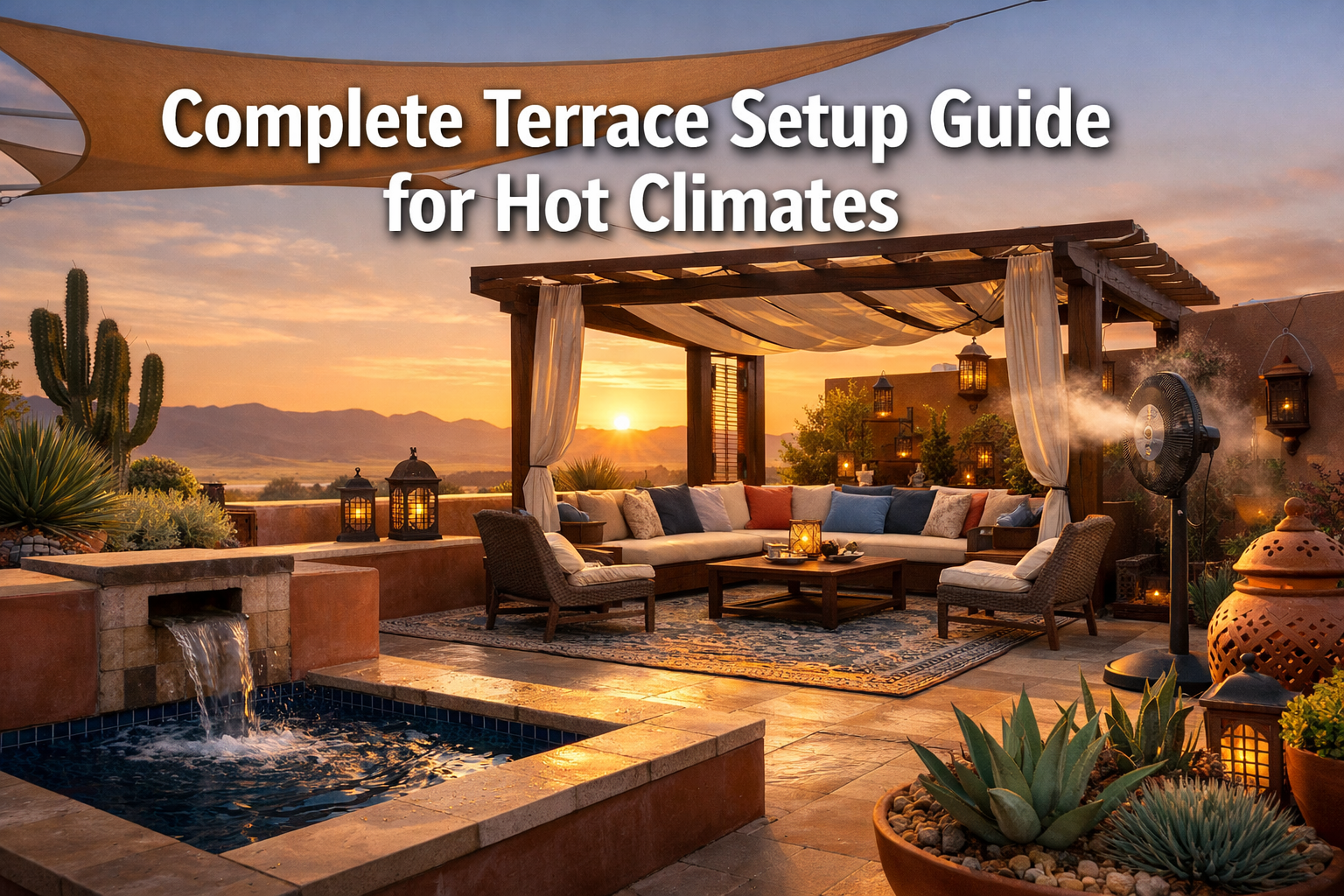
A successful terrace setup for hot climates requires three critical elements: effective shade structures (pergolas, awnings, or shade sails), heat-resistant flooring materials (light-colored ceramics or natural stone), and strategic cooling features like water elements and drought-tolerant plants. The key is creating multiple shaded zones while using materials that reflect rather than absorb heat.
What Makes Terrace Setup Different in Hot Climates?
Hot climate terrace setup demands materials and designs that can withstand extreme temperatures, intense UV radiation, and minimal rainfall while creating comfortable outdoor spaces. Unlike temperate climate terraces, these installations must prioritize heat reflection, shade creation, and water conservation.
The primary challenge is managing surface temperatures that can exceed 140°F (60°C) on dark materials during the summer months. This requires selecting light-colored, heat-resistant materials and creating adequate shade coverage to maintain usable outdoor space year-round.
Key differences from standard terrace setups:
- Material selection focuses on heat resistance over aesthetics alone.
- Shade structures become essential infrastructure, not optional features.
- Water conservation drives plant and irrigation choices.
- Ventilation design prevents dangerous heat buildup.
- Installation timing must account for extreme weather windows.
Essential Shade Solutions for Your Terrace Setup
Effective shade coverage forms the foundation of any hot climate terrace setup. Without proper shade, even the best materials become too hot for comfortable use during peak daylight hours.
Pergolas with climbing plants offer the most versatile shade solution. Install pergolas with 8-10 foot clearance and orient them to block the harshest afternoon sun (typically west-facing). Choose drought-resistant climbing plants like bougainvillea or jasmine that provide dense coverage while requiring minimal water.
Retractable awnings provide flexible shade control throughout the day. Modern motorized awnings can extend automatically based on temperature sensors, ensuring optimal coverage without manual adjustment. Choose awnings with UV-resistant fabrics rated for extreme sun exposure.
Shade sails offer cost-effective coverage for large areas. Install multiple overlapping sails at different heights to create dynamic shade patterns and improve air circulation. Ensure proper tensioning and use stainless steel hardware rated for high-wind conditions.
Common mistake: Installing shade structures too low. Maintain a minimum 8-foot clearance to allow hot air to escape and prevent feeling enclosed.
Choosing Heat-Resistant Flooring for Terrace Setup
The right flooring material can make the difference between a usable terrace and one that’s too hot to walk on barefoot. Surface temperature varies dramatically based on material color, composition, and thermal mass.
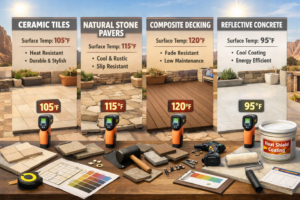
Light-colored ceramic tiles perform best in extreme heat, staying 20-25°F cooler than dark alternatives. Choose tiles with matte finishes to reduce glare and slip resistance. Porcelain tiles rated for outdoor use offer superior durability and heat resistance.
Natural stone options like travertine or limestone provide excellent heat dissipation due to their porous structure. Avoid dark stones like slate or granite, which can become dangerously hot. Seal natural stone annually to prevent heat damage and staining.
Composite decking designed for hot climates offers wood aesthetics without the heat retention. Look for products with cooling technology or light colors. Avoid traditional wood decking, which can warp, crack, and become extremely hot.
Decision rule: Choose materials with Light Reflectance Values (LRV) above 50 for optimal heat management. Test samples in direct sunlight before making final selections.
Strategic Plant Selection and Placement
Plants serve dual purposes in hot climate terrace setups: providing natural cooling through evapotranspiration and creating visual appeal with minimal water requirements.
Drought-tolerant trees like olive, pomegranate, or citrus provide substantial shade while thriving in hot conditions. Plant in large containers (minimum 20 gallons) or built-in planters with proper drainage. Position strategically to shade seating areas during afternoon hours.
Succulent gardens require minimal water while adding texture and color. Group plants with similar water needs together and use gravel mulch to reduce evaporation. Popular choices include agave, aloe, and various cacti species.
Vertical gardens maximize cooling impact in limited space. Install drip irrigation systems with timers to ensure consistent moisture without waste. Choose native plants adapted to local climate conditions for the best results.
Placement strategy: Create plant barriers on the west and south sides of your terrace to block the most intense sun exposure while allowing cooling breezes from other directions.
Cooling Features and Water Elements
Active cooling features can reduce terrace temperatures by 10-15°F while creating pleasant ambient sounds and visual focal points.
Misting systems work exceptionally well in dry climates, providing immediate temperature relief through evaporative cooling. Install high-pressure misting lines around seating areas with automatic timers for peak heat periods.
Water fountains create cooling microclimates through evaporation and air movement. Choose designs with recirculating pumps to minimize water waste. Position fountains to catch prevailing breezes that carry cooling effects across the terrace.
Evaporative cooling fans combine air movement with water evaporation for maximum cooling efficiency. These work best in low-humidity environments typical of desert climates.
Edge case: In high-humidity coastal areas, focus on air movement rather than evaporative cooling, which becomes less effective as humidity increases.
Furniture and Accessory Selection
Outdoor furniture in hot climates must withstand extreme temperatures while remaining comfortable for use throughout the day.
Material priorities:
- Aluminum frames with powder coating resist heat buildup.
- Synthetic wicker stays cooler than natural materials.
- Light-colored cushions with UV-resistant fabrics.
- Avoid metal surfaces that come in direct contact with skin.
Umbrella and shade accessories provide portable cooling solutions. Choose umbrellas with UV protection ratings and sturdy bases designed for wind resistance. Cantilever umbrellas offer maximum flexibility for shade positioning.
Storage solutions protect cushions and accessories from UV damage and dust storms common in hot, dry climates. Invest in weatherproof storage boxes with ventilation to prevent moisture buildup.
Installation Timeline and Maintenance
Proper timing ensures materials perform optimally and workers can complete installation safely during extreme heat periods.
Optimal installation months: October through March when temperatures are moderate, and materials won’t be stressed during curing or setting processes. Avoid summer installation when adhesives, sealants, and other materials may fail due to excessive heat.
Maintenance schedule:
- Monthly: Clean and inspect shade structures for wear.
- Quarterly: Check irrigation systems and plant health.
- Biannually: Seal natural stone and inspect furniture.
- Annually: Deep clean all surfaces and replace worn components.
Heat-specific maintenance: Inspect expansion joints in hard surfaces more frequently, as extreme temperature swings cause more movement than in moderate climates.
FAQ
How much shade coverage do I need for a hot climate terrace?
Aim for 70-80% shade coverage during peak sun hours (10 AM – 4 PM). This allows comfortable use while maintaining some sunny spots for morning and evening enjoyment.
What’s the coolest flooring material for extreme heat?
Light-colored ceramic or porcelain tiles with matte finishes stay coolest, typically 20-25°F below ambient air temperature in shade.
Can I use regular outdoor furniture in desert climates?
Standard outdoor furniture often fails in extreme heat. Choose furniture specifically rated for high-temperature environments with UV-resistant materials and light colors.
How often should I water plants on a hot climate terrace?
Drought-tolerant plants typically need deep watering 2-3 times per week rather than daily light watering. Adjust based on container size and local humidity levels.
Do misting systems work in humid climates?
Misting systems work best in dry climates where evaporation occurs rapidly. In humid conditions, focus on fans and air circulation instead.
What’s the minimum height for shade structures?
Maintain at least 8 feet of clearance to allow hot air to escape and prevent the area from feeling enclosed or trapped.
Should I install a permanent or retractable shade?
A retractable shade offers more flexibility but requires higher maintenance. Choose permanent structures for primary coverage and retractable options for supplemental shade.
How do I prevent furniture from getting too hot?
Use light-colored materials, position furniture in shaded areas, and consider furniture covers during peak heat hours when not in use.
What plants provide the best cooling effect?
Large-leafed plants like banana trees or broad-canopy trees provide maximum evapotranspiration cooling, but choose varieties adapted to your specific climate zone.
Can I install a terrace setup myself in hot climates?
Basic elements like furniture and plants can be DIY projects, but professional installation is recommended for shade structures, irrigation systems, and permanent flooring to ensure proper heat resistance and safety.
How much does a complete hot climate terrace setup cost?
Costs vary widely based on size and features, but budget $15-30 per square foot for basic setups and $40-80 per square foot for premium installations with advanced cooling features.
What’s the biggest mistake people make with hot climate terraces?
Underestimating the need for shade coverage. Many people install minimal shade, thinking they can tolerate more sun than actually possible during peak summer months.
Summary
Creating a comfortable terrace in hot climates requires careful attention to shade, materials, and cooling strategies that work with rather than against extreme temperatures. Success depends on prioritizing heat-resistant materials, adequate shade coverage, and strategic cooling features over purely aesthetic considerations.