Creating a sanctuary in your own backyard is no longer just a luxury; for many of us, balancing high-stress careers and digital fatigue, it has become a necessity for mental well-being.
Having spent years consulting on landscape transitions from cluttered, high-maintenance lawns to minimalist retreats, I have seen firsthand how the principles of Japanese Karesansui (dry landscape) can transform not just a property, but the daily stress levels of its owners.
What is a Zen Garden? Understanding the Core Principles
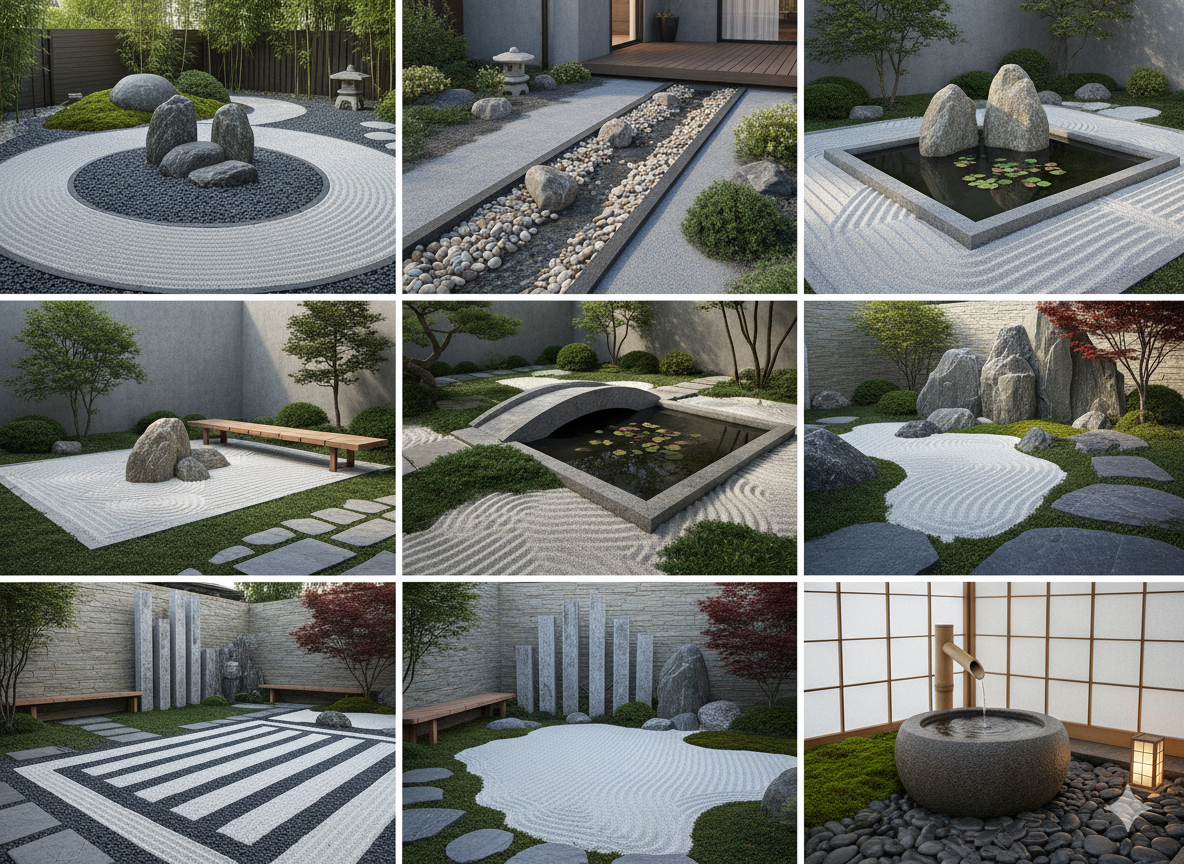
A traditional Zen garden, or Karesansui, is a minimalist Japanese landscape style composed primarily of rocks, gravel, sand, and occasionally a few precisely chosen plants.
Unlike Western gardens that prioritize vibrant colors and seasonal blooms, Zen gardens focus on symbolism, serenity, and self-reflection.
The “dry” landscape uses raked gravel or sand to represent the movement of water, while large stones symbolize islands, mountains, or even animals.
Why Zen Gardens are Ideal for Modern Backyards?
-
Low Maintenance: Once established, they require far less watering and mowing than traditional lawns.
-
Small Space Friendly: These principles work just as well on a 10×10 patio as they do on a sprawling acre.
-
Year-Round Appeal: Because the structure relies on stone and evergreens, the “bones” of the garden look beautiful in all four seasons.
15 Zen Garden Backyard Ideas for Ultimate Tranquility
1. The Raked Sand or Gravel “Ocean.”
The hallmark of a Zen garden is the raked pattern. Use fine-crushed granite or light-colored gravel (1/8 inch to 1/4 inch is ideal).
-
Pro Tip: Avoid playground sand; it is too fine and will blow away or turn into mud. Use “decomposed granite” for better stability.
2. Strategic “Sanzon Ishigumi” Stone Groupings
In Japanese tradition, stones are often placed in groups of three (the triad). A large vertical stone represents the heavens, flanked by two smaller stones representing humanity and earth.
3. Incorporate Shishi-Odoshi (Bamboo Fountain)
The rhythmic “clack” of a bamboo water fountain, originally designed to scare off deer, provides a meditative auditory focal point that masks neighborhood noise.
4. Use Moss as a Ground Cover
Moss adds a “timeless” feel. If your backyard is too sunny for true moss, consider Scotch Moss (Sagina subulata) or Irish Moss, which are resilient and offer that lush, carpet-like texture.
5. Create a “Floating” Wooden Walkway
A cedar or teak boardwalk (Engawa style) provides a clear path through the garden without disturbing the raked gravel.
6. Install a Stone Lantern (Ishidōrō)
A granite lantern adds a structural vertical element and provides soft, ambient lighting for evening reflection.
7. Use Negative Space (Ma)
One of the biggest mistakes beginners make is overcrowding. The concept of Ma (emptiness) suggests that the empty spaces between objects are just as important as the objects themselves.
8. Plant Japanese Maples (Acer palmatum)
For a splash of color, a “Bloodgood” or “Crimson Queen” Japanese Maple provides delicate foliage and a sculptural shape that fits perfectly with Zen aesthetics.
9. Build a Minimalist Bamboo Fence
Hide unsightly plastic bins or neighbor views with a natural bamboo screen. It provides privacy while maintaining a “living” texture.
10. The Zen Fire Pit
While traditional gardens don’t always feature fire, a modern Zen backyard can include a sleek, low-profile concrete fire bowl surrounded by smooth river rocks.
11. Create a “Dry Stream.”
Use different-sized river stones to mimic a winding brook. This is particularly useful for yards with drainage issues, as it can double as a functional French drain.
12. Add a Meditation Bench
Place a simple stone or wooden bench in the “viewing” area of the garden. A Zen garden is meant to be viewed from a specific vantage point rather than walked through haphazardly.
13. Incorporate Evergreen “Clouds.”
Prune boxwoods or pines into rounded, cloud-like shapes (Niwaki style) to represent rolling hills.
14. Use Large-Scale Slate Slabs
Large, flat slate stepping stones can create a “bridge” over the gravel ocean, symbolizing a journey from the chaotic world to a place of peace.
15. The “Hidden” Corner
Even in a small yard, use a tall screen or a group of bamboo plants to create a hidden nook where the rest of the world (and the house) is out of sight.
Traditional vs. Modern Zen Gardens
| Feature | Traditional Karesansui | Modern Zen Backyard |
| Primary Material | Raked sand, specific stones | Gravel, wood, pavers, and concrete |
| Plant Life | Minimal (Moss, Lichen) | Japanese Maples, Grasses, Succulents |
| Purpose | Monastic Meditation | Relaxation, Entertaining, Visual Appeal |
| Maintenance | High (Daily ranking) | Medium to Low |
| Water Feature | Symbolic (Sand “water”) | Functional (Fountains, Fire pits) |
Real-World Case Studies
Case Study 1: The Urban “Concrete Jungle” Conversion
The Challenge: A homeowner in Seattle had a small 15×15 concrete patio that felt cold and industrial.
The Solution: Instead of tearing up the concrete, we used modular wooden decking to create a raised platform. We surrounded the platform with black river stones and installed a three-tier bamboo water feature in the corner.
The Result: The sound of the water neutralized the street noise, and the wood warmed up the space. The homeowner reported using the area for morning yoga every day during the summer.
Case Study 2: The Drainage Solution Zen Garden
The Challenge: A suburban yard in Florida suffered from standing water after heavy rains.
The Solution: We designed a “Dry Creek” Zen garden. We dug a shallow trench lined with heavy-duty pond liner and filled it with various sizes of granite. We placed “islands” of large boulders and planted water-loving ferns along the edges.
The Result: The garden now manages runoff effectively, and the “dry stream” looks beautiful even when it’s not raining.
Case Study 3: The Low-Maintenance Professional’s Retreat
The Challenge: A busy professional wanted a garden but had zero hours a week for maintenance.
The Solution: We used a heavy-duty weed barrier topped with 3 inches of “Salt and Pepper” gravel. We focused on permanent structures: a large granite lantern, three massive basalt pillars, and two slow-growing “Sky Pencil” Hollies.
The Result: Aside from occasional leaf blowing, the garden requires less than 30 minutes of maintenance per month.
Technical Maintenance
To ensure your Zen garden stays pristine and AdSense-quality (avoiding the “neglected” look that hurts site trust), follow these maintenance standards:
-
Weed Prevention: Always use a professional-grade landscape fabric (not the thin plastic kind) beneath your gravel. I recommend brands like Dewitt Pro 5 for maximum durability.
-
Raking Techniques: Use a wooden rake with wide teeth. To keep patterns sharp, rake when the gravel is slightly damp.
-
Stone Cleaning: Over time, light-colored stones may develop algae. A diluted solution of oxygen bleach (like OxiClean) and a soft brush will restore their brightness without killing nearby plants.
Summary
A Zen garden is more than a landscaping project; it is a commitment to creating a space that honors silence and simplicity. Whether you start with a small tabletop version or a full backyard renovation, the focus should always be on balance and intention.