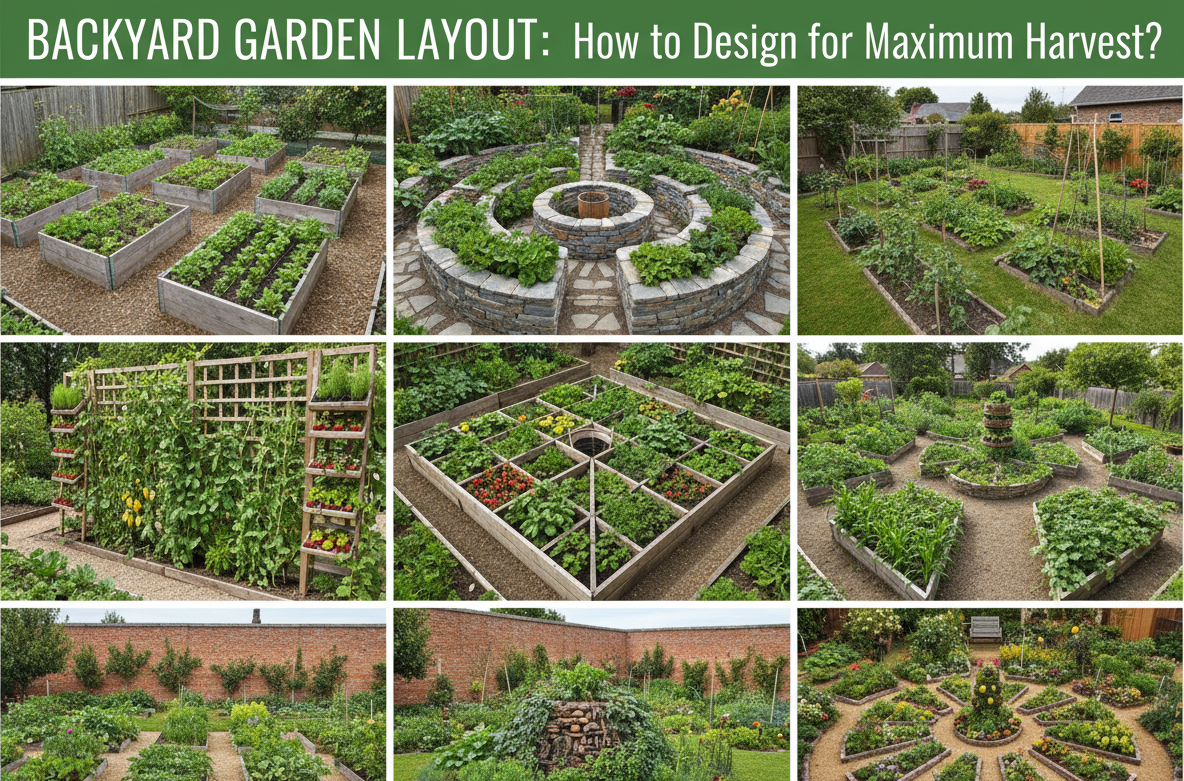
When planning an outdoor garden, it can be hard to find the right balance between how it looks and how much it produces. A lot of people who are just starting plant what looks good at the time.
By July, they find that their tomato plants are suffocating their peppers, and the cabbage has bolted from too much sun.
Over the years I’ve been in charge of small-scale edible landscapes, I’ve learned that a “maximum harvest” isn’t just how many plants you can fit into the ground; it’s also about where you put each seedling so that it gets the most sunshine, soil health, and access.
The Foundation: Sun, Water, and Soil Site Analysis
Before you drive a single stake into the ground, you must understand the “microclimates” of your backyard.
Prioritizing Sunlight
Most fruiting vegetables (tomatoes, peppers, cucumbers) require at least 6 to 8 hours of direct sunlight.
-
South-Facing Orientation: In the Northern Hemisphere, your garden rows should ideally run North to South. This prevents taller plants (like corn or trellised beans) from shading out smaller crops (like bush beans or greens) as the sun moves across the sky.
-
Shade Management: Reserve the eastern or partially shaded areas for “cool-weather” crops like spinach, kale, and cilantro, which tend to become bitter or “bolt” (go to seed) when exposed to intense afternoon heat.
Proximity to Water
If your garden is more than 50 feet from a water source, you are less likely to water it during a heatwave. For a high-yield layout, I always recommend installing a drip irrigation system.
According to the University of California Agriculture and Natural Resources, drip irrigation can be up to 90% efficient, delivering water directly to the roots and reducing disease by keeping foliage dry.
Choosing Your Gardening Style: Rows vs. Beds
To maximize your harvest, you need to minimize “wasted” space—specifically, paths.
Intensive Raised Beds
Raised beds (typically 4×8 feet) are the gold standard for high-yield backyard gardening. Because you never step on the soil inside the bed, it remains aerated and loose, allowing roots to penetrate deeper. This allows for intensive planting, where crops are spaced closer together than in traditional row farming.
The “No-Dig” Method
Popularized by experts like Charles Dowding, the no-dig method involves layering organic matter (compost) on top of the soil rather than tilling it. This preserves the soil’s fungal networks and “wood wide web,” leading to hardier plants that produce more fruit with less fertilizer.
Maximizing Vertical Space
When you run out of horizontal square footage, go up. Vertical gardening can triple your yield in the same footprint.
-
A-Frame Trellises: Perfect for cucumbers and squash. By growing these vertically, you keep the fruit off the ground, reducing rot and pest damage from slugs.
-
Cattle Panel Arches: These are inexpensive and incredibly strong. They can support heavy crops like pumpkins or indeterminate tomatoes, creating a “tunnel” that makes harvesting easy and keeps the garden organized.
-
Indeterminate vs. Determinate: For maximum harvest over a long season, choose indeterminate tomato varieties. They continue to grow and fruit until the first frost, whereas determinate (bush) varieties produce all their fruit at once.
Strategic Crop Comparison
| Factor | Traditional Row Planting | Intensive Raised Beds | Vertical Gardening |
| Yield per Sq. Ft. | Low to Medium | High | Extremely High |
| Maintenance | High (Weeding paths) | Medium | Low (Less ground contact) |
| Water Efficiency | Low | High | Medium |
| Best For | Large acreage, corn, potatoes | Most vegetables, herbs | Vines, peas, tomatoes |
Successional Planting and Intercropping
The secret to a harvest that lasts from May to October is never leaving a patch of soil empty.
-
Succession Planting: As soon as your spring radishes or peas are finished, pull them out and immediately transplant your summer peppers or heat-tolerant greens.
-
Intercropping (The “Nurse” Method): Plant fast-growing crops in the shadows of slow-growing ones. For example, sow lettuce underneath your tomato plants. By the time the tomatoes are large enough to need the space, the lettuce has been harvested.
Real-World Examples & Case Studies
Case Study 1: The “Small-Batch” Suburban Success
A gardener in Zone 7 converted a 10×10-foot patio corner into a vertical herb and salad station. By using tiered planters and a single 4-foot trellis for “Sugar Snap” peas, they produced enough greens to skip the grocery store salad aisle for five months straight.
-
Key Takeaway: Verticality compensates for a lack of ground space.
Case Study 2: The “Three Sisters” Guild
Inspired by indigenous agricultural techniques, a community garden in the Midwest utilized the “Three Sisters” layout: Corn, Beans, and Squash planted together. The corn provides a pole for the beans, the beans fix nitrogen in the soil, and the squash leaves act as a “living mulch” to keep the soil moist.
-
Key Takeaway: Companion planting reduces the need for external fertilizers and weeding.
Case Study 3: The High-Yield Market Garden
Using the methods of Jean-Martin Fortier, a micro-farm utilized 30-inch wide permanent beds with 12-inch paths. By focusing on high-turnover crops like baby kale and arugula, they achieved multiple harvests from the same bed in a single season.
-
Key Takeaway: Standardizing bed widths makes it easier to manage tools and crop rotation.
Essential Maintenance Checklist
To ensure your layout remains productive year after year, follow these trust-based practices:
-
Crop Rotation: Never plant the same family (e.g., Nightshades like tomatoes/potatoes) in the same spot two years in a row. This prevents soil-borne diseases from building up.
-
Soil Testing: Every two years, send a sample to your local University Extension office. Reliable data on your soil’s pH and nutrient levels is better than any “all-purpose” fertilizer.
-
Mulching: Use organic straw or shredded leaves to suppress weeds. A weed-free garden directs all its energy into fruit production.
Final Thoughts
Designing a backyard garden for maximum harvest is a journey of observation and adjustment. By prioritizing sunlight, utilizing vertical space, and keeping your soil healthy through “no-dig” practices, you can create a highly efficient system that feeds your family all season long.