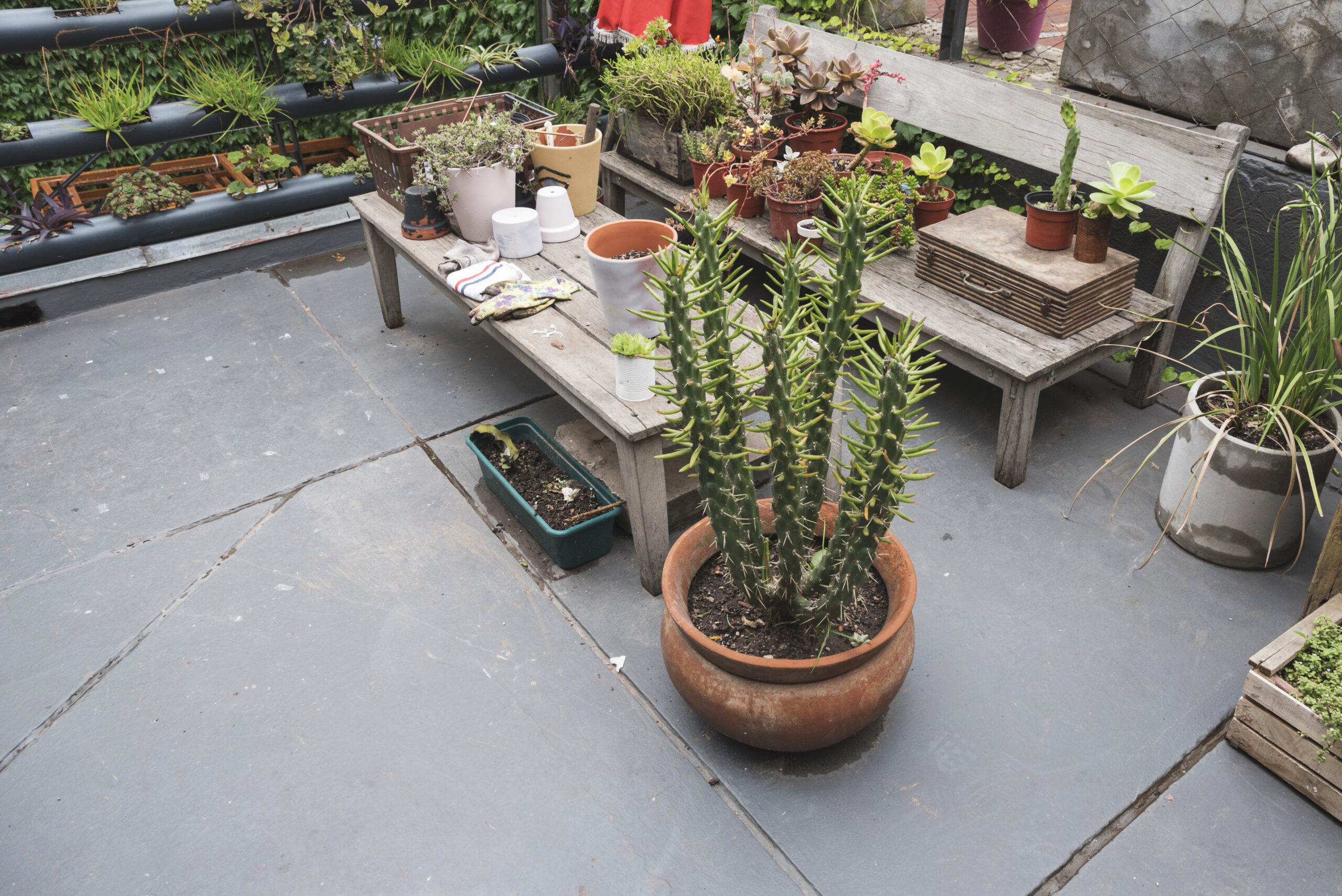
It takes more than just placing a few pots next to the railing and hoping for rain to create a functional, attractive container garden on a deck. Even seasoned gardeners can become confused by the interactions between weight restrictions, drainage, wind exposure, and container choice.
Money, dead plants, and a great deal of aggravation can be avoided by starting with these fundamentals.
The Weight Problem Nobody Talks About Until It’s Too Late
Older or do-it-yourself decks may weigh significantly less than a normal home deck constructed in accordance with regulations, which can support 40–60 pounds per square foot.
The weight of a single 24-inch ceramic pot loaded with moist soil can range from 80 to 120 pounds. The structural math quickly becomes uncomfortable when you multiply that by a complete deck configuration.
What to do:
- Use a structural engineer or consult a contractor if the deck is older than 15 years or visually showing stress.
- Stick to fiberglass, lightweight resin, or fabric grow bags for large planters. A 25-gallon fabric bag weighs a fraction of an equivalent ceramic bag.
- Distribute weight near the posts and beams, not the center of the deck boards.
- Use perlite or bark fines to replace up to 30–40% of potting mix volume. This alone can cut container weight by 25–30%.
The University of Maryland Extension specifically recommends lightweight container mixes for rooftop and deck gardens where load is a concern.
Container Selection: Match the Plant, Not the Aesthetic
The temptation is to buy matching pots that look good together. That’s fine, but the container must fit the plant’s root system, not the other way around.
| Plant Type | Minimum Container Depth | Recommended Size |
|---|---|---|
| Herbs (basil, parsley, chives) | 6–8 inches | 8–12 inch diameter |
| Lettuce, spinach, greens | 6–8 inches | 12–18 inch wide trough |
| Tomatoes (determinant) | 12–14 inches | 5-gallon minimum, 15-gallon preferred |
| Peppers | 10–12 inches | 3–5 gallon |
| Cucumbers, squash | 14–18 inches | 10–15 gallon |
| Small fruit trees (dwarf) | 18–24 inches | 25–30 gallon |
Going too small is the most common container gardening mistake. A Roma tomato plant crammed into a 3-gallon pot will fruit, but the yield is 20% of what a properly sized container produces.
Drainage Is a Non-Negotiable
A pot without proper drainage turns into a slow rot chamber. Every container needs holes, but there’s nuance to how it’s handled on a deck.
Saucers collect overflow and protect the deck surface, but also hold standing water against the container base, which promotes root rot and wood damage underneath. The better move: elevate pots on pot feet or cedar blocks by at least 1/2 inch. This lets water drain fully and allows air circulation under the container.
For wooden decks, use rubber or silicone pot feet rather than metal, which can rust-stain the boards.
Avoid the “gravel layer at the bottom” myth. Research from container horticulture studies has consistently shown that a layer of gravel below potting mix actually raises the perched water table inside the container, rather than improving drainage, which is the opposite of the intended effect.
Soil Mix: Potting Mix, Not Garden Soil
Garden soil compacts into a dense, airless block inside containers. It also introduces pests, pathogens, and inconsistent drainage. Always use a quality potting mix formulated for containers.
For edible plants and flowers with high nutrient demand, amend with:
- Slow-release granular fertilizer worked into the mix at planting (follow label rate for container use).
- Compost — up to 25% of volume — for water retention and microbial life.
- Perlite — 15–20% of volume — for drainage and weight reduction.
Reusing potting mix from previous seasons is possible, but it breaks down over time and loses structure. After one season, refresh the old mix by adding 30–40% new potting soil and topping up with compost.
Watering on a Deck
Containers dry out faster than in-ground beds because of three compounding factors: limited soil volume, heat absorption from surrounding deck material, and wind exposure. On a hot summer day, a dark container on a south-facing deck can lose moisture rapidly enough that daily watering isn’t just helpful, it’s required.
A few practical approaches that actually reduce watering labor:
Self-watering containers use a reservoir system where the plant draws moisture upward by capillary action. For greens, herbs, and compact vegetables, these are genuinely worth the higher upfront cost. Gardener’s Supply Company has run field trials showing 50–60% water savings versus conventional containers in comparable conditions.
Drip irrigation with a timer scales well if the setup is larger than 10 pots. A basic timer, pressure reducer, and 1/4-inch emitter lines can be installed in an afternoon for under $80. This pays off fast in plant health and time saved.
Moisture meters ($10–15) remove the guesswork. Stick it in the soil before watering — if it reads above 4 on a 1–10 scale, hold off.
Sun Mapping: Know Your Deck Before Planting
Before choosing what to grow, observe the deck at 9 am, 12 pm, and 4 pm on a clear day and note which areas get direct sun. Deck configurations vary significantly. A south-facing deck with no overhead obstruction can hit 8–10 hours of direct sun; a north-facing one against a shaded wall may struggle to get 4.
General sun requirements:
- Vegetables and fruiting plants (tomatoes, peppers, cucumbers): 6–8+ hours.
- Herbs (basil, rosemary, thyme, oregano): 6+ hours.
- Leafy greens (lettuce, spinach, kale): 4–6 hours; will bolt faster in full sun in summer.
- Flowers (impatiens, begonias, ferns): 2–4 hours (shade-tolerant).
If the deck only gets 4–5 hours, pivot to a greens and herb garden rather than fighting tomatoes in an environment they won’t perform well in.
Wind Management
Decks above the first floor face real wind exposure that ground-level gardens don’t. Wind desiccates foliage, topples tall plants, and accelerates water loss from both plants and soil.
Practical fixes:
- Use heavier containers near the railing for taller plants, or stake containers to railing posts with adjustable plant ties.
- Install a trellis or lattice screen perpendicular to the prevailing wind direction. Even a 30–40% wind reduction significantly improves plant health.
- Choose compact cultivars bred for containers — ‘Tumbler’ tomatoes, ‘Spacemaster’ cucumbers, ‘Patio’ peppers. These handle wind better than vining indeterminate varieties.
A Real-World Layout: 8×12 Foot Deck
Here’s how to structure a productive, practical container garden on a modest deck without overcrowding or overloading:
Zone 1 — Railing (linear troughs, 24–36 inches, 6–8 inch depth): Trailing herbs, lettuce, chives. Lightweight. Stays out of the main floor area.
Zone 2 — Corners (heavy anchors, 15–25 gallon): One determinate tomato per corner, staked. Near structural posts for weight distribution.
Zone 3 — Center path edges (5-gallon grow bags): Peppers, basil, compact squash. Easily moved for maintenance.
Zone 4 — Wall-facing area (vertical pocket planter or wall-mounted trough): Strawberries, trailing herbs, nasturtiums. Zero floor footprint.
This approach keeps weight near posts, leaves clear walking space, and groups plants by watering frequency — which simplifies the maintenance routine.
Common Mistakes Worth Avoiding
Underwatering and assuming rain will cover it. Overhangs often protect deck containers. A rainstorm that soaks a nearby garden bed can leave deck containers completely dry.
Planting too early. A frost-tender tomato set out in early April on a deck with no wind protection will suffer far more than the same plant in a sheltered in-ground bed. Wait until nighttime temps hold consistently above 50°F.
Ignoring fertilizer. Container soil flushes nutrients with every watering. Plants in containers need regular feeding, a balanced liquid fertilizer every 10–14 days during active growth is a baseline, not optional.
Buying plants instead of planning for succession. One purchase of six lettuce starts gives a two-week harvest window, then nothing. Sow a small tray of seeds every three weeks through late summer for a continuous harvest.
Choosing containers for looks only. Dark-colored containers absorb heat and can cook roots in summer. Light-colored or insulated containers or a simple burlap wrap around dark pots make a measurable difference in summer survival.
FAQ
How many containers can a typical deck support?
Most code-compliant decks handle 40–60 lbs/sq ft. Use lightweight containers, distribute weight near structural posts, and stay conservative. Five to eight medium containers (5–15 gallon) on a 100-square-foot deck is reasonable. Larger setups need structural verification.
What’s the best potting mix for containers?
A quality commercial potting mix (not “potting soil” with added fertilizer, which burns some seedlings) amended with 15–20% perlite and a slow-release fertilizer. Brands like FoxFarm Ocean Forest or Espoma Organic Potting Mix consistently perform well in container growing tests.
Can a deck container garden be productive enough to reduce grocery spending?
Yes, but the math works best with high-value crops: herbs (fresh basil at $3–4/bunch), cherry tomatoes, salad greens, and peppers. A well-managed 8×10 deck garden focused on these crops can yield $200–400 in produce value through a growing season in most climates.
Do containers need to come inside in winter?
Ceramic and terracotta crack in freeze-thaw cycles. Move them inside or to a garage before the first hard freeze. Fiberglass and resin containers handle freezing better. Empty and invert all containers for storage, which extends their lifespan significantly.
How do I deal with pests in a deck container garden?
Physical barriers (row cover fabric) and neem oil handle the most common container pests: aphids, spider mites, and whitefly. The isolated nature of deck gardens actually helps; fewer soil-borne pests than in in-ground beds. Inspect plants weekly; catching infestations early is far easier than controlling established ones.