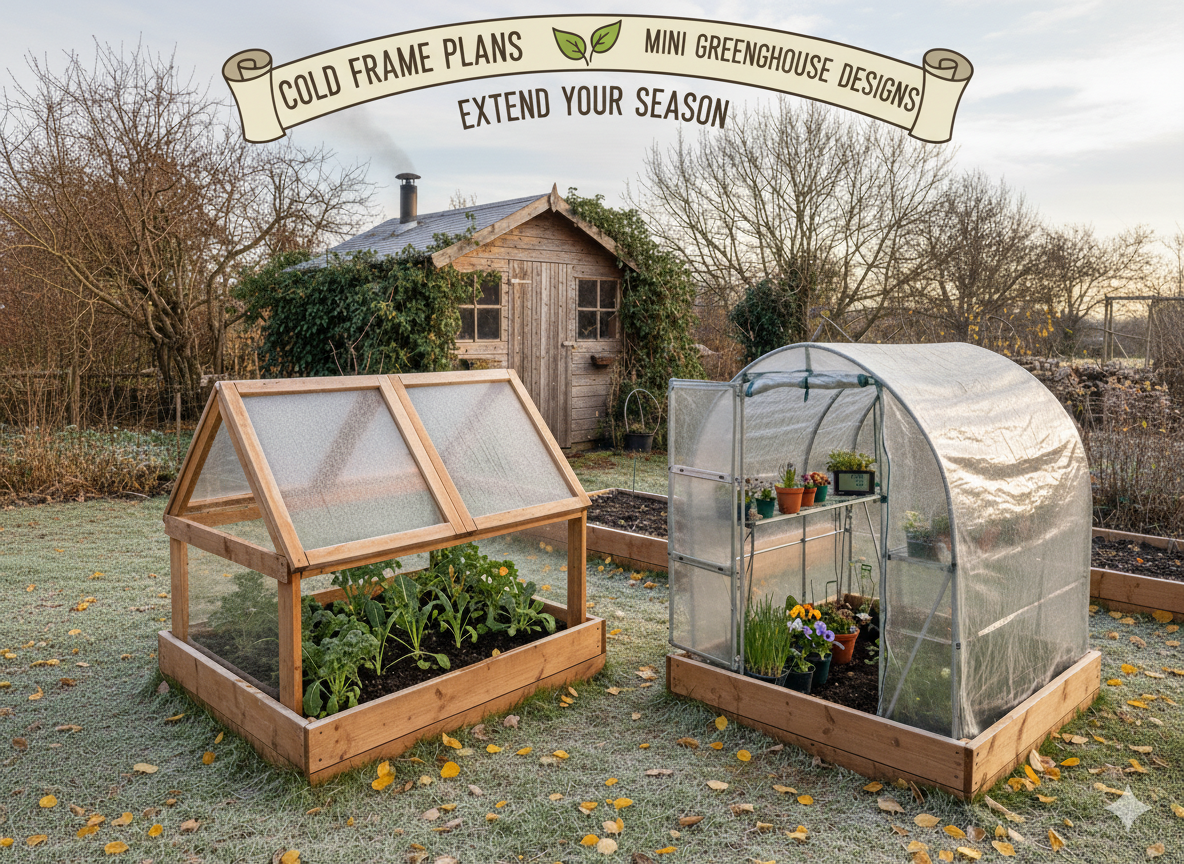
Investing in structures that extend the growing season is one of the best things a gardener can do, whether they want to get a head start in the spring or extend the harvest into the fall. Cold frames and small greenhouses are two of the most popular choices.
They can be used for similar things, but they are very different in how they are made, how much they cost, and how you use them every day.
What Are They, Exactly?
A cold frame is a low-profile box that sits flat on the ground with a glazed, sloping lid. Traditional versions use wooden or brick sides; modern ones often use aluminium frames with glass or polycarbonate panels on all sides and the top.
A mini greenhouse is a taller, vertically standing glazed structure, think of it as a compact version of a full greenhouse, often with shelves inside and a cover or rigid panels that you slide or lift to access plants.
Both trap solar heat and shield plants from wind, rain, and frost. The key differences lie in height, temperature management, and how much control you have over growing conditions.
How Much Season Do They Actually Add?
Here’s the practical answer: both structures can add roughly one month at each end of the growing season. If you’d normally sow outdoors in April, you can start in March. If your season typically ends in September, you can push it through October with either structure in place.
That’s a meaningful extension, potentially two extra months of productive growing per year without any heating system required.
Cold Frames: Strengths and Honest Drawbacks
What Cold Frames Do Well?
Cold frames are particularly effective at warming soil early in the year, which makes them ideal for soil-grown crops like potatoes and root vegetables. Because they’re low to the ground and movable, you can shift them to fresh ground each season, a useful trick for reducing soil-borne disease buildup.
They’re also the go-to tool for hardening off seedlings: that critical transition phase when tender young plants grown under glass need to acclimatise to outdoor conditions before being planted out permanently.
In autumn, a cold frame provides enough protection against light frosts to keep cool-season crops like lettuce, spinach, kale, and radishes producing well past their usual cutoff.
Temperature Regulation: The Main Challenge
One significant practical difference between plastic-covered cold frames and all-glass or all-panel designs comes down to how much monitoring they demand.
Structures with clear panels on all sides let in more light, which is generally good, but that same light brings heat, and on a sunny day, temperatures inside can spike rapidly. You’ll find yourself adjusting ventilation frequently to keep conditions stable.
Simpler plastic-covered cold frames with opaque or semi-translucent sides tend to require less active temperature management, making them more forgiving for beginners.
Wind Vulnerability
Lightweight cold frames, particularly plastic-covered versions, are vulnerable to gusts. They can be blown over entirely, and even when the frame stays in place, small pots inside can topple. If your garden is exposed, peg down any lightweight frame and consider adding weight (bricks work well) to the base.
Wooden-sided frames are heavier and more stable but come at a higher cost.
The Wood vs. Plastic Question
Wooden cold frames look better and feel more substantial, but build quality varies widely, and they’re considerably more expensive, sometimes double or triple the price of a comparable plastic model.
For basic frost protection and season extension, a well-placed plastic frame often performs just as effectively at a fraction of the cost. Look for end-of-season sales; prices can drop dramatically.
Mini Greenhouses: More Height, More Complexity
Where Mini Greenhouses Shine?
Mini greenhouses can accommodate taller plants that would outgrow a cold frame, such as tomatoes, chillies, aubergines, and climbing crops that need vertical space to develop. They’re also a space-efficient way to grow a layered range of plants using their built-in shelving.
In late spring and summer, the additional warmth a mini greenhouse traps encourages faster ripening and larger yields from heat-loving crops. In winter, they can shelter alpines from rain (which causes more damage than frost for many alpine species) and protect tender overwintering plants.
Ventilation Is the Weak Spot
Many mini greenhouse designs lack good ventilation control. Unlike a full-size greenhouse, where the large air volume buffers temperature swings, a mini greenhouse has a high surface-area-to-volume ratio.
This makes internal conditions more volatile: it heats up fast, cools down fast, and without adequate venting, humidity can build to damaging levels.
Where possible, choose a model with adjustable vents or panels that can be left partially open. Placing a mini greenhouse against a wall also helps by reducing the number of exposed sides, moderating temperature fluctuations, and giving it some wind shelter.
Shelves and Shade
The shelving that extends usable space in a mini greenhouse also creates shade, and that’s a real trade-off for propagating seedlings that need maximum light; shadowing from upper shelves can slow growth and cause plants to stretch.
Position the most light-hungry seedlings at the top, and use lower shelves for plants that tolerate shade or are further along in development.
Plastic Covers: A Hidden Cost
Many entry-level mini greenhouses use loose plastic covers rather than rigid glazing. These covers are often difficult or impossible to replace when they tear or degrade, and they will degrade, usually within a couple of seasons.
The initial low price can become a poor investment. If your budget allows, rigid glazed versions, or those with replaceable panel systems, offer better long-term value.
Side-by-Side Comparison
| Feature | Cold Frame | Mini Greenhouse |
|---|---|---|
| Height | Low (suits ground-level crops) | Taller (suits upright/vining plants) |
| Season extension | ~1 month each end | ~1 month each end |
| Temperature control | Moderate (lid/vent adjustment) | Harder (more volatile) |
| Wind resistance | Variable (light frames vulnerable) | Better if wall-placed |
| Best use | Soil crops, hardening off, propagation | Multi-tier growing, taller crops |
| Cost | £15–£80+ | Varies; covers degrade |
| Portability | High | Moderate |
| Light access | Good (especially all-glass designs) | Can be shaded by shelves |
Which Plants Suit Which Structure?
Cold frame:
- Cool-season vegetables: lettuce, spinach, kale, radishes, carrots
- Early potatoes and root crops (soil warming)
- Seedlings being hardened off
- Alpine plants overwintering (rain protection)
- Semi-ripe cuttings and propagation
Mini greenhouse:
- Tomatoes, chillies, aubergines (heat-lovers needing height)
- Layered seedling production across multiple shelves
- Taller annual and perennial plants
- Overwintering tender plants where height is needed
Budget Alternatives Worth Knowing
If you’re not ready to invest in either structure, some low-cost improvised options genuinely work. Cut-down plastic bottles make effective individual cloches for seedlings or young transplants.
Panes of glass raised on bricks, or old window frames resting on timber sides, can cover a row or raised bed and cost almost nothing. With careful ventilation management, these makeshift solutions are good enough for most purposes.
For permanent raised beds, a cold frame lid placed directly on top of the bed in early spring is one of the most efficient ways to warm soil ahead of planting, with no separate structure required.
Practical Tips Before You Buy
1. Assess your wind exposure. If your garden is open and gusty, prioritise heavier frames or plan to anchor lightweight ones. A blown-over frame in March can wipe out weeks of seedlings.
2. Think about what you’re actually growing. If your goal is cool-season salads and early potatoes, a cold frame is all you need. If you want to grow tomatoes or chillies under cover without a full greenhouse, the extra height of a mini greenhouse earns its place.
3. Factor in ventilation before purchasing. Test how easily any model vents. Structures that only open fully (or not at all) give you much less control and raise the risk of cooking your plants on an unexpectedly warm spring day.
4. Glass vs. plastic glazing. Glass outperforms plastic in light transmission, durability, and insulation. Plastic degrades faster and scratches easily, reducing light over time. Where budget allows, glass is the better long-term choice.
5. Consider bubble wrap insulation for winter. A layer of bubble plastic fixed to the inside of either structure adds meaningful insulation against frost. It does reduce light and ventilation, so it’s a winter-only measure; remove it once temperatures reliably rise in spring.
Final Thoughts
Both structures offer genuine, practical value. A cold frame is the simpler, more affordable starting point, particularly for gardeners focused on soil-grown crops and the hardening-off process. A mini greenhouse earns its extra cost when you need vertical growing space and the ability to keep taller plants under cover. In many gardens, both earn a place.
FAQs
Can I heat a cold frame or mini greenhouse in winter?
Yes, small paraffin heaters or even tea light setups can raise temperatures enough to protect frost-tender plants. This is most practical in a wooden cold frame, which holds heat better than a lightweight plastic one.
Do I need to use these structures year-round?
No. Most gardeners use them intensively in spring and autumn and leave them open or store them in summer. That said, both can be useful in summer for protecting crops like tomatoes and chillies from cool nights or unseasonal rain.
What’s better, a cold frame on a raised bed or a freestanding mini greenhouse?
For soil warming and root crops, a cold frame on a raised bed wins. For multi-tier seedling production or taller plants, a mini greenhouse makes better use of limited space.
How do I stop my cold frame from overheating on sunny days?
Prop the lid open at varying angles during the day and close it again before evening. Thermostatic vent openers are available for some frames and will do this automatically.
Is glass safer than polycarbonate in a cold frame?
Glass provides better light transmission and doesn’t yellow over time, but it’s heavier and breaks more dangerously. Tempered or horticultural glass is safer. Polycarbonate is lighter and shatterproof, making it a sensible choice if children or pets use the garden regularly.