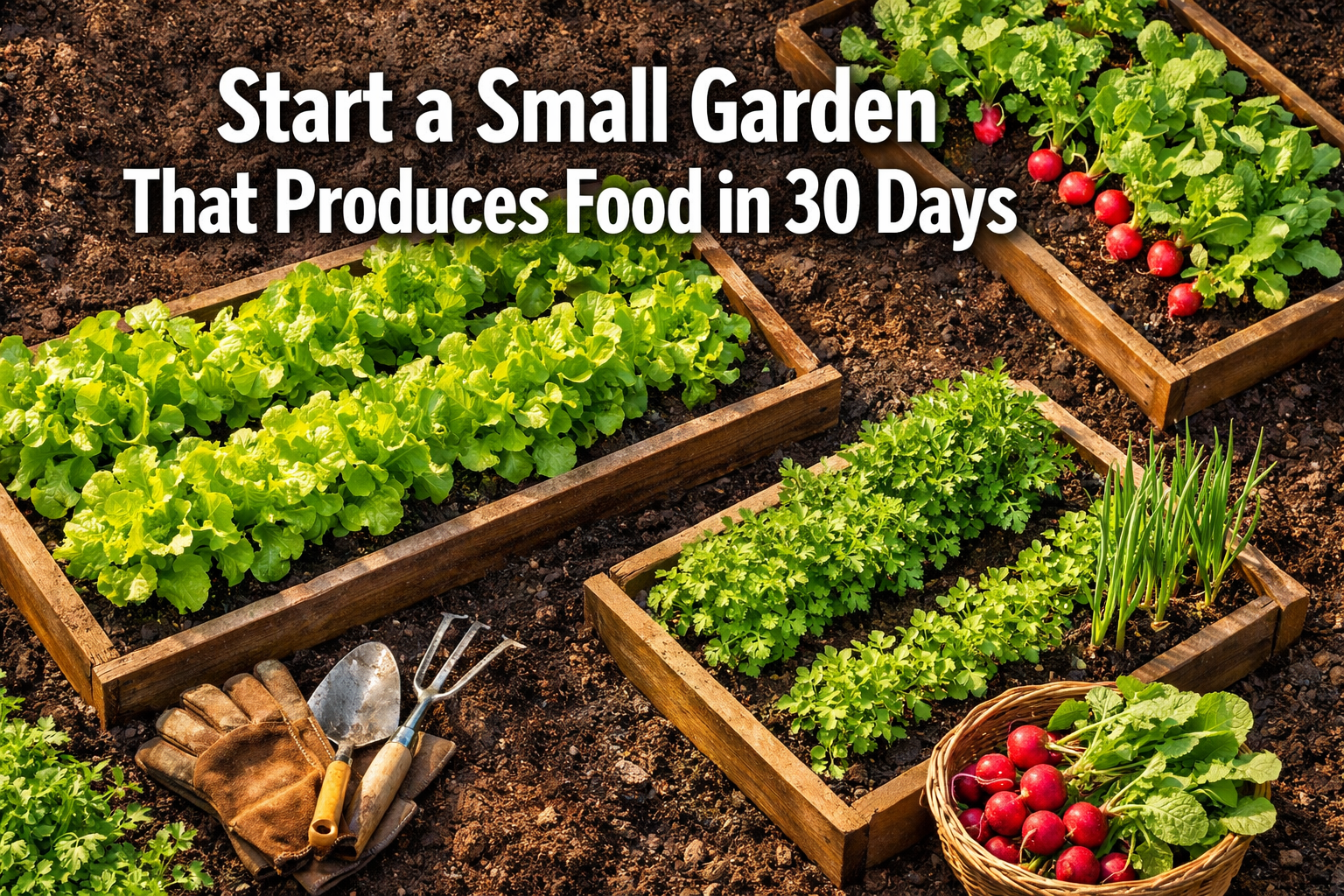
Fresh vegetables can grow from seed to harvest in just 30 days when you choose fast-growing crops like lettuce, radishes, and spinach. A small garden measuring 4×4 feet can produce enough greens and vegetables to supplement meals for a family of four within one month, provided the right planning and daily care routine is followed.
What Vegetables Actually Grow in 30 Days?
Only specific fast-growing vegetables can produce harvestable food within 30 days from seed. Lettuce varieties mature in 25-30 days, radishes in 25-35 days, and spinach in 30-40 days. Herbs like cilantro and basil also reach usable size within this timeframe.
Best 30-day vegetables:
- Leaf lettuce: Buttercrunch, Black Seeded Simpson (25-30 days).
- Radishes: Cherry Belle, French Breakfast (25-30 days).
- Spinach: Space, Bloomsdale (30-35 days).
- Arugula: Standard variety (25-30 days).
- Cilantro: Slow bolt varieties (25-30 days).
- Green onions: From sets, not seeds (20-25 days).
Avoid these slower crops for 30-day goals: tomatoes (60+ days), peppers (70+ days), carrots (60+ days), and beans (50+ days).
Select varieties specifically labeled as “fast-growing” or “quick-maturing” on the seed packet. Baby greens can be harvested even earlier at 20-25 days for smaller but tender leaves.
How Much Space Do You Need to Start a Small Garden?
A productive 30-day garden needs just 16-25 square feet of space or equivalent container area. This translates to a 4×4 foot raised bed or 6-8 large containers (5+ gallons each). Smaller spaces work, but reduce total harvest volume.
Space requirements by crop:
- Lettuce: 4-6 inches between plants.
- Radishes: 2-3 inches between plants.
- Spinach: 3-4 inches between plants.
- Herbs: 6-8 inches between plants.
Container options that work:
- Raised bed: 4×4 feet, 8+ inches deep.
- Large planters: 5-10 gallon capacity each.
- Window boxes: 36+ inches long, 8+ inches deep.
- Fabric grow bags: 10+ gallon size.
Choose the sunniest available location with 6+ hours of direct sunlight daily. South-facing areas work best. Indoor growing requires grow lights positioned 12-18 inches above plants for 12-14 hours daily.
What Supplies Are Essential to Start a Small Garden?
Starting a productive 30-day garden requires basic tools, quality growing medium, seeds, and consistent water access. Total startup costs range from $50-150 depending on space size and container choices.
Essential supplies checklist:
- Seeds: $15-25 for a variety pack of fast-growing vegetables.
- Growing containers: $30-80 for raised beds or large planters.
- Potting soil: $20-40 for quality organic mix (2-3 cubic feet).
- Hand trowel: $8-15 for planting and transplanting.
- Watering can or hose: $10-25 for consistent moisture.
- Scissors: $5-10 for harvesting leaves and herbs.
Soil quality matters most for fast growth. Choose an organic potting mix with compost rather than garden soil, which drains poorly in containers. Look for mixes labeled for vegetables or containing perlite for drainage.
Avoid expensive tools initially. A simple hand trowel, watering can, and kitchen scissors handle all necessary tasks for small gardens. Add tools gradually as the garden expands.
Step-by-Step 30-Day Garden Plan
Week 1 focuses on setup and seed starting, while weeks 2-4 involve daily care and progressive harvesting. This timeline assumes spring or fall planting when temperatures stay between 50-75°F consistently.
Week 1: Setup and Planting
- Day 1-2: Prepare containers, fill with potting soil, and plan layout.
- Day 3: Plant radish and lettuce seeds directly in containers.
- Day 4: Start spinach and herb seeds indoors in small pots.
- Day 5-7: Water daily, watch for first sprouts (radishes emerge first).
Week 2: Early Growth
- Days 8-10: Transplant indoor seedlings outdoors when 2+ inches tall.
- Days 11-14: Thin overcrowded seedlings, maintain daily watering.
Week 3: Rapid Development
- Days 15-17: Begin harvesting baby lettuce leaves (cut outer leaves first).
- Days 18-21: Plant a second succession of seeds for continuous harvest.
Week 4: First Major Harvest
- Days 22-25: Harvest mature radishes and full lettuce heads.
- Days 26-30: Continuous harvesting of herbs and spinach leaves.
Water daily in the morning hours. Plants need 1-2 inches of water weekly, more in hot weather. Check soil moisture by inserting a finger 1 inch deep.
How Do You Maintain Daily Care for Fast Growth?
Fast-growing vegetables require consistent daily attention to reach harvest size in 30 days. Daily watering, weekly feeding, and pest monitoring ensure maximum growth rates and healthy plants.
Daily care routine:
- Morning watering: Check soil moisture, water if the top inch feels dry.
- Visual inspection: Look for pest damage, yellowing leaves, or growth issues.
- Harvesting: Pick mature outer leaves to encourage continued growth.
Weekly tasks:
- Liquid fertilizer: Apply diluted vegetable fertilizer every 7-10 days.
- Thinning: Remove overcrowded seedlings to give remaining plants space.
- Succession planting: Start new seeds every 10 days for a continuous harvest.
Common problems to watch:
- Bolting: Plants are going to seed early due to heat stress.
- Aphids: Small green insects clustering on leaves.
- Damping off: Seedling stems rotting at the soil level from overwatering.
Choose slow-bolt varieties of lettuce and spinach for hot weather. Use row covers if temperatures exceed 80°F regularly. Remove affected plants immediately to prevent disease spread.
What Are the Most Common Mistakes When You Start a Small Garden?
New gardeners typically fail by choosing slow-growing crops, inconsistent watering, or overcrowding plants. These mistakes prevent achieving meaningful harvests within 30 days and discourage continued gardening.
Top mistakes that kill 30-day success:
- Wrong crop selection: Planting tomatoes or peppers, expecting quick results.
- Overcrowding: Planting seeds too close together stunts growth.
- Inconsistent watering: Letting the soil dry completely between waterings.
- Poor soil choice: Using heavy garden soil instead of quality potting mix.
- Insufficient light: Placing containers in shady locations with under 6 hours of sun.
How to avoid these problems:
- Stick to proven fast-growing varieties listed on seed packets.
- Follow spacing guidelines exactly, thin seedlings ruthlessly.
- Set daily watering reminders, check soil moisture consistently.
- Invest in quality organic potting soil from the start.
- Monitor sun exposure, move containers if needed.
Recovery strategies if problems occur: Replant immediately with fast-growing crops, increase watering frequency, thin overcrowded areas, and relocate containers to sunnier spots. Most mistakes can be corrected within 5-7 days if caught early.
FAQ
How much food can a 4×4 garden actually produce in 30 days?
A well-managed 4×4-foot garden produces 2-4 pounds of lettuce, 1-2 pounds of radishes, and 1 pound of herbs within 30 days. These supplements 8-12 meals for a family of four.
Can you start a small garden indoors without outdoor space?
Yes, using grow lights and containers near south-facing windows. LED grow lights positioned 12-18 inches above plants for 12-14 hours daily work well for leafy greens and herbs.
What’s the best time of year to start a 30-day garden?
Spring (after last frost) and fall (8-10 weeks before first frost) offer ideal growing conditions. Summer works with shade cloth, and winter requires indoor growing in most climates.
How much does it cost to start a small garden for 30-day harvests?
Initial costs range $50-150 including containers, soil, seeds, and basic tools. Ongoing costs are $10-20 monthly for seeds and fertilizer.
Do you need fertilizer for such a short growing period?
Yes, fast growth requires nutrients. Use liquid vegetable fertilizer weekly at half-strength, or choose potting soil pre-mixed with slow-release fertilizer.
What happens if plants don’t mature in exactly 30 days?
Most fast-growing crops reach harvestable size within 25-35 days. Cool weather may extend this to 40 days, while warm conditions can speed growth to 20-25 days.
Can you replant the same containers immediately after harvest?
Yes, refresh with new potting soil or compost, then replant immediately. Succession planting every 10 days ensures continuous harvests throughout the growing season.
How do you know when vegetables are ready to harvest?
Lettuce: outer leaves reach 4+ inches long. Radishes: shoulders show above the soil surface. Spinach: leaves reach 3+ inches. Herbs: plants reach 4+ inches tall with multiple sets of leaves.
Conclusion
Starting a small garden that produces food in 30 days requires selecting fast-growing crops like lettuce, radishes, and spinach, providing consistent daily care, and using quality growing materials in adequate space. A 4×4 foot area or equivalent containers can yield meaningful harvests when properly managed with daily watering and weekly feeding.
Take action this week by purchasing seeds for fast-growing varieties, setting up containers with quality potting soil, and establishing a daily watering routine. Plant your first seeds within 3 days of setup, then begin succession planting every 10 days for continuous harvests.
The key to 30-day success lies in choosing proven fast-growing varieties, maintaining consistent moisture, and providing adequate space and sunlight. Start small, focus on daily care habits, and expand gradually as confidence and experience grow.