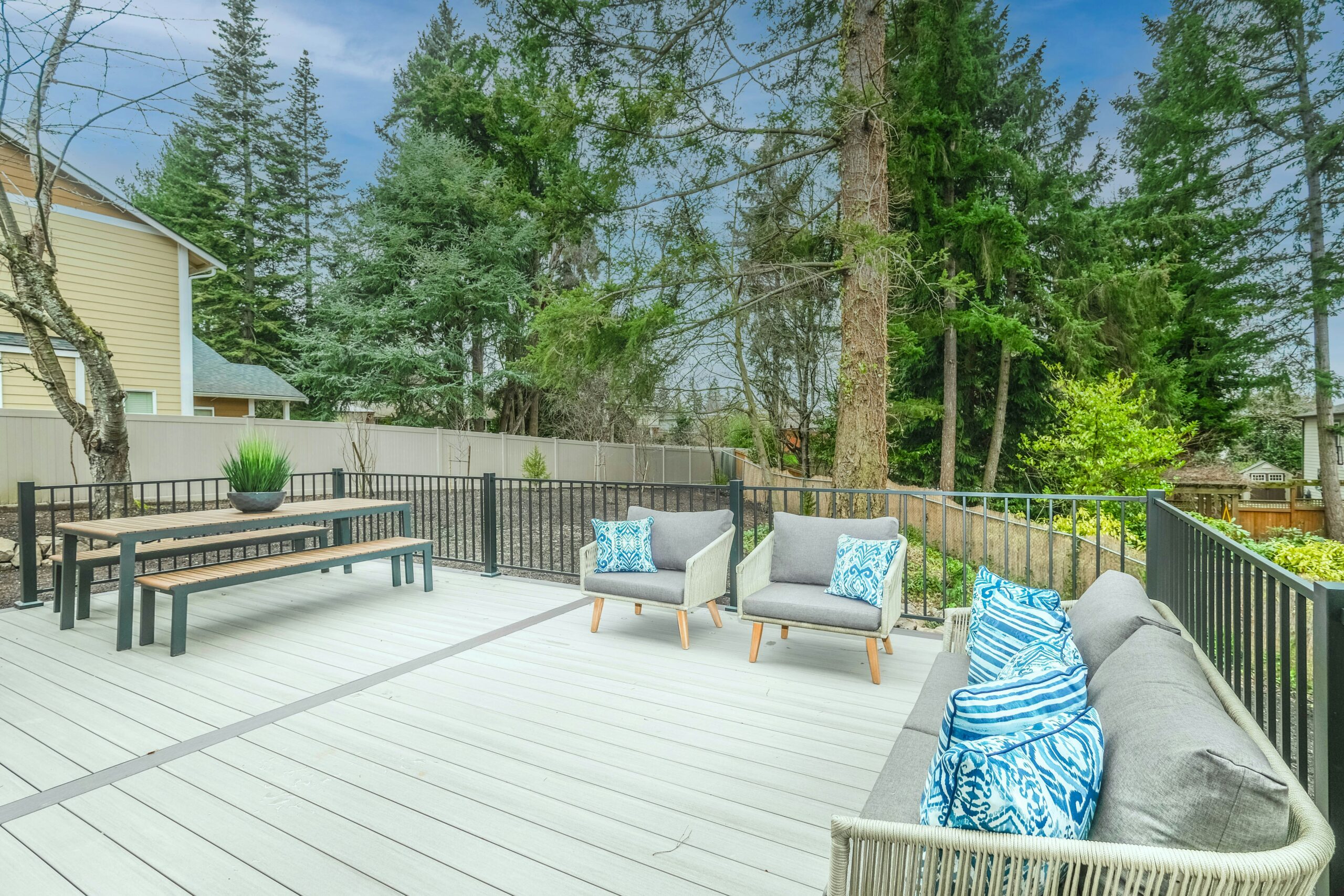
A breezy outdoor space refreshes you on a warm afternoon, but a sudden gale can quickly disrupt your sanctuary. If you live in a high-rise, coastal area, or open countryside, wind management is crucial.
Wind-proofing your terrace to prevent plants and furniture from blowing away is a common challenge. Strong gusts can damage furniture, uproot greenery, and become unsafe. You can still create your ideal outdoor haven.
Strategic layout, material, and anchoring choices help you tame the elements and safely enjoy the outdoors.
How To Keep Your Terrace Plants and Furniture From Blowing Away?
If you need immediate ways to secure your outdoor space, consider these steps.
These simple solutions will help protect your belongings before the next major storm:
- Group items together: Push heavier seating against lighter chairs to create a stable, unified group
- Remove potential catch-points: Take off cushions, table umbrellas, and fabric covers that can catch the wind.
- Anchor to the deck: Use heavy-duty cords or straps to tie table legs to the railing.
- Weigh down bases: Place specialised sandbags or gravel bags over the feet of lightweight seating.
- Relocate fragile greenery: Move tall, top-heavy potted plants into corners, where wind currents are weakest.
- Lay pots flat: If a severe storm is approaching, carefully lay tall planters on their sides to prevent tipping.
Choosing Wind-Resistant Terrace Furniture
The foundation of a weather-ready balcony starts with what you buy. Lightweight plastics and thin aluminium pieces easily lift off the ground during a strong breeze. Instead, prioritise density and physical design when outfitting your exterior rooms.
Invest in Heavyweight Materials
Gravity is your best defense against strong weather currents. Solid wood options like teak, oak, or eucalyptus naturally resist tipping because of their dense cellular structure. These woods also weather beautifully over time, adding organic character to your layout.
Wrought iron and solid steel are excellent alternatives for dining sets and lounge chairs. While they require occasional rust-prevention treatments, their sheer mass keeps them firmly planted on the ground. Bob Vila recommends choosing iron pieces with wide bases to further lower their centre of gravity.
Aerodynamic Designs
Heavy materials work best with open, slatted designs. Solid backs on chairs or benches block the air, turning the furniture into a sail. Choose chairs with woven backs, slatted wood, or open metal grids.
This porous design lets gusts pass through the furniture instead of pushing against it. For dining tables, a heavy glass or slatted wood top reduces the surface area vulnerable to upward lifts. Always ensure any glass used outdoors is tempered for safety.
Anchoring and Securing Your Current Furniture
You might already own a patio set that is on the lighter side. You do not have to replace your entire collection to achieve stability. Various discrete anchoring systems can keep your current pieces exactly where you placed them.
Furniture Weights and Sandbags
Canopy weights, often used for pop-up tents, are incredibly useful for outdoor sofas. You can wrap these fabric weights around the legs of your couches to keep them grounded. They are available in neutral colors that blend seamlessly with your outdoor rugs and flooring.
Fill decorative fabric bags with pea gravel or play sand. Place these custom weights inside the hollow bases of resin tables or on the bottom shelves of bar carts. This adds hidden stability without compromising your visual aesthetic.
Bungee Cords and Deck Anchors
If your exterior floor features wooden decking with gaps between the boards, deck anchors are a brilliant solution. These small metal pegs slip between the wood planks and twist to lock securely underneath. You can then attach a small carabiner or cord from the anchor to your furniture legs.
For solid concrete floors, heavy-duty bungee cords connected to existing railings provide temporary security. Loop the cord around the thickest part of the chair frame and hook it to a sturdy iron balustrade. This method is especially helpful during seasonal storm warnings.
Protecting Your Terrace Plants from Strong Gusts
Greenery breathes life into a hardscape, but tall stems are vulnerable to snapping. Planters also present a challenge, as the soil dries out faster when exposed to constant air movement.
Protecting your garden requires thoughtful species selection and secure potting methods.
Selecting Wind-Tolerant Plant Varieties
Not all greenery survives exposure to harsh currents. Broad-leaved tropicals will tear and shred, while delicate stems will break. Focus on planting resilient varieties accustomed to coastal or mountainous environments.
Ornamental grasses, such as Festuca or Miscanthus, bend gracefully rather than resisting the pressure. Mediterranean plants like olive bushes, lavender, and rosemary feature small, tough leaves that prevent moisture loss. The Royal Horticultural Society suggests grouping these hardy plants together to create a natural microclimate.
Securing Pots and Planters
Tall, tapered pots look elegant but are the first to topple. Choose wide, low-profile planters made from heavy materials like concrete, terracotta, or thick glazed ceramic.
The wider the base, the less likely the pot will tip. For existing pots, add a layer of heavy river rocks or broken pottery to the bottom before adding soil. You can also use specialised plant pot anchors.
These straps loop around the container and attach to a heavy base plate or a nearby wall.
Installing Physical Wind Barriers
Sometimes, modifying your furniture and foliage is not enough to stop the draft. Changing the architecture by blocking incoming gusts is the most permanent solution. Physical barriers can transform a blustery balcony into a calm, usable room.
If you have a stunning view you want to preserve, a glass balustrade is the ultimate upgrade. Thick, tempered glass panels block the breeze completely while maintaining visual transparency. They create a sleek, modern aesthetic that suits contemporary apartments and coastal homes.
Ensure the glass is professionally installed with marine-grade stainless steel fittings. These fixtures will not corrode, even in salty coastal environments. Keep in mind that solid glass barriers will require regular cleaning to maintain their crystal-clear appeal.
Trellises and Privacy Screens
A solid wall can create harsh turbulence as the air rushes over the top edge. Permeable barriers, like wooden trellises or slatted privacy screens, are often more effective. They filter the breeze, breaking its force and turning a gale into a gentle draft.
Enhance a wooden trellis by training climbing vines, like star jasmine or ivy, to grow through the gaps. Bamboo screens are another lightweight, easily installable option. They add a tropical texture to the space while significantly reducing air velocity.
Strategic Layout Planning for Windy Balconies
The way you arrange your items dictates how the weather interacts with them. Placing your largest, heaviest items along the perimeter can create a protective wall for the rest of the space. Treat your layout as a defensive perimeter.
Push your heaviest sofa against the dominant windward wall. Place delicate items, like lightweight side tables or fragile potted flowers, behind this heavy furniture. This creates a staggered defence, where the sturdiest pieces take the brunt of the impact.
Never place large, flat items parallel to the prevailing breeze. Turn tables and sofas so the narrowest edge faces the incoming gusts. This simple adjustment reduces the pressure applied to your belongings.
4 Tips for a Weather-Ready Terrace
Before you finalise your layout, review these essential tips to ensure your setup withstands the seasons:
1. Audit Your Umbrellas: Standard patio umbrellas are notorious for taking flight. Invest in a cantilever umbrella with a vented canopy that allows air to escape through the top. Always close and tie the umbrella securely when not actively in use.
2. Store Cushions Cleverly: Invest in an outdoor storage bench made of heavy teak or metal. Use it as extra seating, and stash your lightweight pillows and cushions inside the moment the weather turns grey.
3. Use Museum Wax: For small tabletop decor like lanterns, ashtrays, or decorative bowls, apply a small dab of museum wax to the base. It secures the item firmly to the table but peels off easily without damaging the finish.
4. Monitor the Forecast: Preparation is your strongest tool. Set up severe weather alerts on your phone. Moving three delicate pots indoors is easier before the rain starts pouring.
Final Thoughts
You can wind-proof your terrace and ensure your plants and furniture stay secure. Key takeaways: choose heavy, wind-resistant materials and aerodynamic designs, anchor lightweight furniture, use weights or deck anchors, select wind-tolerant plants and secure pots, install wind barriers where possible, and plan your layout for maximum protection.